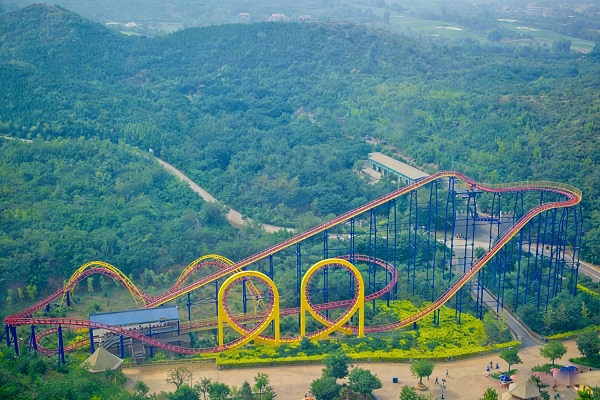
A large roller coaster can become one of the most visible attractions in an amusement park, but scale alone does not make it a good investment. A proper large roller coaster investment feasibility study should examine visitor demand, available land, attraction mix, project budget and long-term operating capability before the park commits to a major coaster.
For some destination parks, a large thrill coaster can strengthen the park’s identity and attract an older visitor segment. For a smaller family-oriented venue, the same capital may be more effectively distributed across several attractions.
Does Your Park Have the Right Target Audience?
Large thrill coasters primarily depend on a sufficient population of teenagers and adults who actively seek higher-intensity rides.
A park dominated by families with young children may not obtain the same utilization rate, even if the coaster has strong visual impact. Management should study visitor age, group composition, peak-season attendance and current ride usage before making the decision.
A destination park that already has strong family coverage may use a major coaster to broaden its audience. A developing regional park may instead need more accessible attractions first.
Should You Compare a Family Coaster First?
Yes. The decision should not be framed only as “large coaster or no coaster.”
A family roller coaster alternative for smaller parks can provide a coaster experience while serving a wider family audience and typically using a more compact project scale.
Family models may also be easier to integrate with carousels, trains and other mixed-age attractions. A large thrill coaster becomes more compelling when the park already has sufficient family products and specifically needs a signature high-intensity attraction.
How Much Land Can a Large Roller Coaster Require?
Roller coaster footprints vary widely according to track layout rather than just maximum height.
DINIS planning material identifies large fixed coasters as projects where footprint, capacity, height, foundations and installation should all be reviewed together. The broader product-planning structure also separates family coasters from major thrill configurations because their site and target-audience requirements differ substantially.
The station, queue, exit, maintenance access and construction area must also be added around the equipment layout. A park should not purchase a coaster based only on an apparently empty parcel of land.
What Should Be Included in the Investment Budget?
The equipment quotation is only one part of the project.
A commercial thrill-coaster project budget evaluation should consider foundations, shipping, unloading, cranes, installation, utilities, commissioning, staff training and local review requirements in addition to the ride itself.
This type of project is generally treated as capital expenditure, meaning the investor should evaluate it over a longer operating horizon rather than judge the project from one season of ticket sales.
A contingency should also be maintained for site-specific civil work and logistics.
Can a Large Coaster Create Value Beyond Ticket Sales?
A signature coaster may support park marketing, destination recognition and increased interest among thrill-oriented visitors. It can also provide content for advertising, social media and seasonal campaigns.
However, none of those benefits should be treated as guaranteed revenue. A large ride still needs sufficient attendance, reliable operation and an attraction mix that encourages visitors to stay in the park.
The DINIS roller coaster project specialists can use site information and target-audience requirements to develop a preliminary equipment proposal, while the investor should maintain an independent commercial feasibility assessment.
When Is a Large Roller Coaster Worthwhile?
A large coaster is easier to justify when the park has adequate land, sufficient funding, strong existing attendance and a clear demand for thrill attractions. It is harder to justify when the project depends mainly on optimistic visitor-growth assumptions or when foundations, installation and maintenance have not been included in the budget.
The final question is therefore not whether a large roller coaster is impressive. It is whether that coaster fills a real gap in the park’s attraction strategy and can be supported throughout its operating life.
The available roller coaster range can be reviewed at https://www.topridesale.com/amusement-park-roller-coasters-for-sale/
Leave a Reply