A flying saucer ride combines rotation, swinging, and lifting motion, so its daily inspection routine must cover more than a simple visual check. Operators who follow a structured walk-around catch small defects before they become breakdowns or safety issues. This guide lists the flying saucer ride daily inspection points that matter most before the first guest boards.
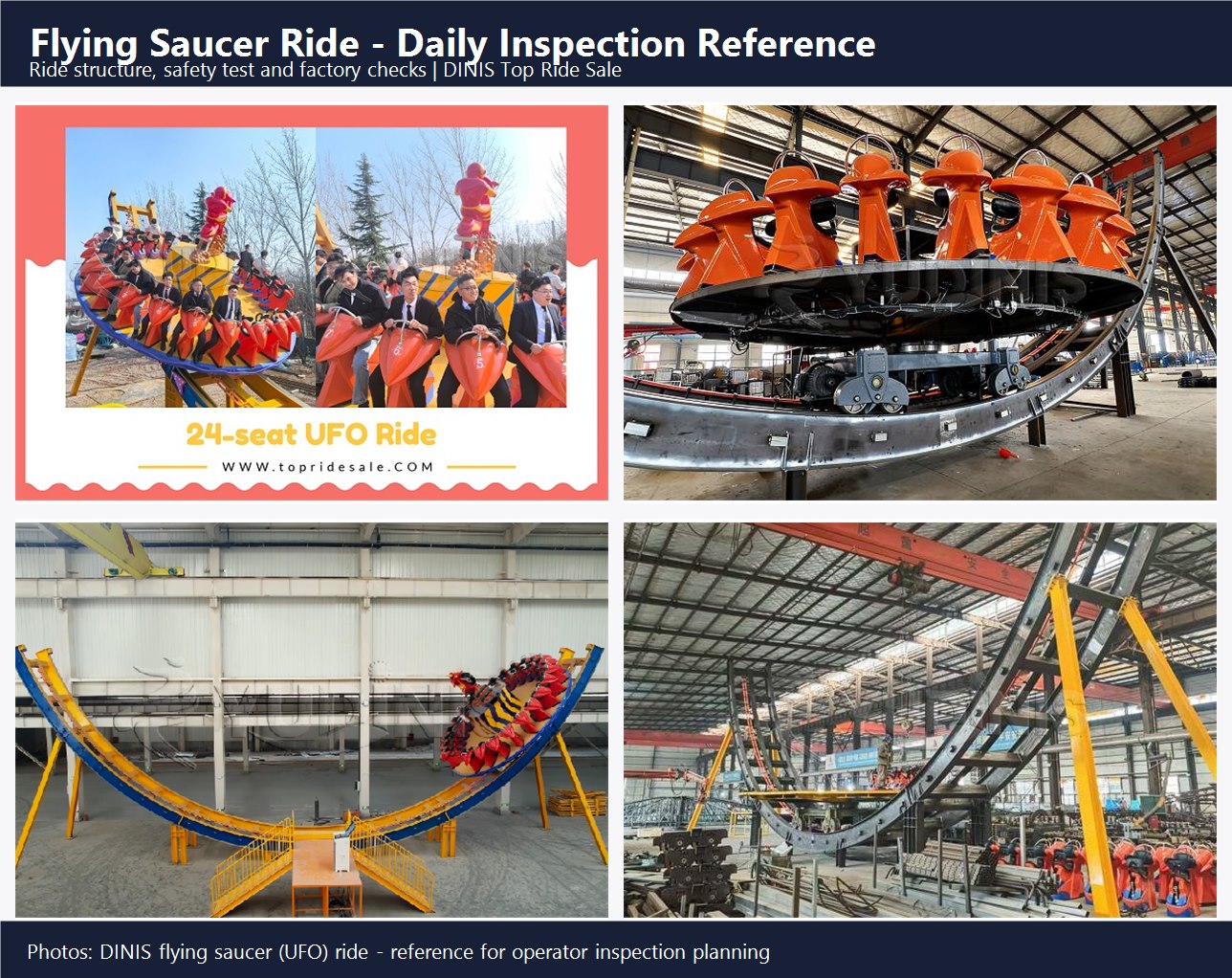
Pre-Opening Visual Walk-Around
Begin with the ride empty and stationary. Walk the full perimeter and look for anything unusual: fresh oil marks, loose panels, damaged decoration, debris inside the ride area, or freshly disturbed surfaces around the foundation. Check that the safety fence, gates, and signage are intact, and confirm that no foreign objects have been left inside the dynamic envelope.
Restraints and Locking Systems
Restraints are the most safety-critical items on any ride. Test each seat’s restraint individually: locking, release, and belt condition. Look for fraying, stiffness, or a lock that does not engage positively, and remove the seat from service if anything is doubtful. Record which restraints were checked, because a written record is the operator’s best defence during an inspection. These checks form the core of flying saucer ride safety checks.
Drive, Braking, and Hydraulics
Inspect the drive system for abnormal noise, vibration, or leakage, and confirm the brake engages and releases correctly at low speed before opening. On hydraulic and pneumatic systems, check fluid levels and look for weeping seals or damp patches on cylinders and hoses. Test the emergency stop from the operator position and confirm that the ride comes to rest as designed.
Structure, Fasteners, and Welds
Check the main structure for cracks, corrosion, and loose fasteners, paying attention to joints that carry dynamic loads. Look at anchor bolts – a nut that has moved or a washer that has loosened is a signal that needs investigation rather than tightening and forgetting. Where a related pendulum-type attraction operates nearby, its maintenance schedule can be aligned with the flying saucer for efficiency, as with any pendulum ride maintenance programme.
Electrical, Lighting, and Controls
Confirm the control panel indicators work, that all lighting functions operate, and that cables and connectors show no damage or moisture. Test the ride at low speed and listen for changes in sound. Any new noise, delay in response, or flickering light should be recorded and reported to the maintenance team before guests are loaded.
Operating Area and Guest Safety
Finally, verify that the queue is correctly formed behind the barrier, that walkways are clear, and that no advertising stands or seating have been moved into the safety zone overnight. Brief the staff on the day’s checks, weather conditions, and any restriction noted by maintenance, then record the inspection in the daily log.
A disciplined daily routine – visual walk-around, restraints, drive and braking, structure, electrical, and operating area – keeps the ride reliable and demonstrates that the operator understands the attraction. Work with an experienced Top Ride Sale ride manufacturer that supplies inspection schedules and spare parts, and review the general principles of amusement ride safety to build a complete maintenance programme. To discuss models and service support, visit https://www.topridesale.com/flying-saucer-ride/.
Leave a Reply